SS Tilawa Silver: The Once Forgotten Chapter in the Epic Saga of WWII
World War I was referred to by many as “The War to End All Wars,” but ironically, World War II became the most devastating conflict of the century just two decades later. One often-forgotten chapter of this destruction unfolded just after the war shifted in favor of the Allied forces.
World War I was referred to by many as “The War to End All Wars,” but ironically, World War II became the most devastating conflict of the century just two decades later. One often-forgotten chapter of this destruction unfolded just after the war shifted in favor of the Allied forces.
Prime Minister Churchill’s famous quote is etched into history, spoken just ten days before the SS Tilawa set sail on its fateful voyage. He delivered it at the Lord Mayor’s Luncheon in London following the pivotal British victory at El Alamein.
This is not the end. It is not even the beginning of the end. But it is, perhaps, the end of the beginning.
Winston Churchill, November 10, 1942
During World War II, British passenger ocean liners were routinely commissioned to transport cargo and passengers across perilous seas, constantly in danger of enemy attack. One such vessel was the SS Tilawa, a lengthy 137.5-meter (451-foot) vessel powered by a single 4-cylinder coal-fired steam engine. On November 20, 1942, the ship embarked on its final voyage from Ballard Pier in Mumbai—then called by its British colonial name, Bombay—bound for Durban, South Africa.
Introduction – Forgotten and Remembered
The SS Tilawa carried 732 passengers, 222 crew members, and four gunners, along with an immense cargo of 75 tonnes of silver bullion minted at the Bombay refinery. This treasure trove was bound for the South African Mint in large industrial-size pure silver bars, where it would be struck into legal tender to bolster the country’s desperate wartime economy.
A Civilian Ship Meets a Mysterious Fate
Unfortunately, the Tilawa met a tragic fate. The civilian passenger ship was sunk by the Japanese for mysterious reasons still unknown today, turning what should have been a routine voyage to Africa into an infamous maritime legend. Later dubbed the “Indian Titanic,” the SS Tilawa remained a forgotten tale for decades. But thanks to the recovered silver treasure trove, its enduring treasure will echo through history, heralding its story for generations to come.
Impacted Survivors – Keeping the Legacy Alive
The relatives and descendants of survivors and those lost at sea have been the strongest advocates for preserving the history of the SS Tilawa’s tragic fate. Their dedication to remembrance ensures that the ship’s legacy is never forgotten. Prominent organizations with such stoic missions include the SS Tilawa Foundation (SSTilawa.com) and Tilawa 1942 Heritage Productions Inc. (Tilawa1942.com).
“Our mission is to keep the memory of the SS Tilawa and its passengers alive,” says the SS Tilawa Foundation. Their work includes chronicling survivor accounts, researching the ship’s history, and educating future generations about this remarkable chapter in maritime history. For a deeper dive into firsthand accounts of the ordeal, refer to the foundation’s websites.
Because Tilawa’s historic silver treasure is now available to investors, collectors, and enthusiasts alike, the ship’s story will be cherished for generations – never to be forgotten. The vessel’s silver trove offers a lasting testimony to a tale of tragedy, resilience, and triumph.
By owning a piece of the SS Tilawa’s recovered silver, you hold in your hands a tale of wartime desperation and human sacrifice—preserved through the enduring allure of the indispensable precious metal, silver. The recovered silver is more than an investment; it is a bridge between past and present, ensuring that the legacy of the Tilawa lives on—exactly what these organizations set out to accomplish.
In the words of the SS Tilawa Foundation, we, too, wish to recognize and respectfully mourn those lost at sea while helping others reflect on the lasting impact this tragic event has had on both the survivors and the families of those who perished. The SS Tilawa Foundation is dedicated to uncovering historical truth and preserving the ship’s legacy.
On November 20, 1942, the SS Tilawa set sail from British colonial Bombay, bound for the shores of Africa. The passenger list primarily consisted of Indian nationals and colonial officials, along with a valuable cargo of silver bullion minted at Bombay’s then-prestigious refinery. This shipment of 75 tonnes of silver bars was destined for the South African Mint, where it would be converted into legal tender silver coinage—a critical solution to wartime shortages of real money. More on the completion of this silver’s destiny later.
According to first-hand accounts, the SS Tilawa was severely overcrowded. With first-class, second-class, and deck passengers packed together, there was hardly room to move. At 17:00 hours, the ship set sail, leaving Bombay Harbor behind. Once at sea, a mandatory safety drill was conducted, and strict blackout orders were enforced—matches and torches were forbidden on the upper deck, and portholes were painted black and sealed shut at night. The fear of an enemy submarine attack weighed heavily on both passengers and crew. Unfortunately, that fear would soon become a devastating reality.
In times of great uncertainty, people turn to precious metals to safeguard their wealth. Hoarding silver coinage was a crucial way to store real commodity-based money during the war. However, as Sir Thomas Gresham postulated, bad money—fiat paper currency—drives out good money like gold and silver from the monetary system. South Africa, struggling with wartime economic shortages, desperately needed to replenish its reserves of real money.
The Attack – A Tragedy at Sea
Tragically, on November 23rd, just three days into its voyage and halfway to South Africa, the SS Tilawa’s journey was cut short. A Japanese I-29 submarine struck the ship with a torpedo in the Indian Ocean, near the Seychelles Islands, approximately 1,000 miles off the East African coast. The attack crippled the vessel, sealing the fate of the Tilawa and its passengers, but the ship remained afloat—until it was dealt a second, fatal blow.
Just thirty minutes after the first torpedo, before passengers had adequate time to fully abandon ship, the Japanese I-29 fired again, striking the port side. The massive explosion sent the ship, along with many of its passengers, into the depths of the Indian Ocean within minutes.
“The remaining passengers and crew either jumped or were thrown overboard and hysterically made for rafts or boats. Others were too scared and shocked to move and sank with the ship,” wrote one survivor.
Among the heroic figures aboard was First Radio Officer E.B. Duncan, who remained at his post, relentlessly transmitting S.O.S. signals after the initial attack. His distress calls ultimately saved lives but left him no time to escape. After the second explosion, Duncan heroically went down with the ship, sacrificing himself to ensure the message reached rescuers.
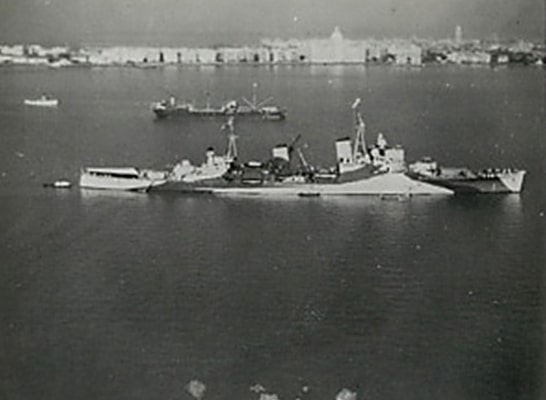
Fortunately, the HMS Birmingham received Duncan’s final transmission and raced to the scene.
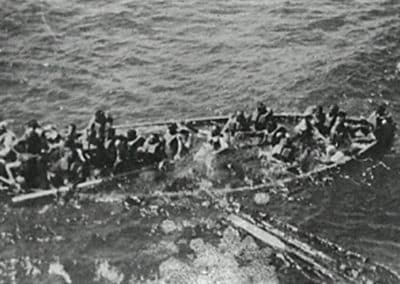
The devastating attack on the SS Tilawa resulted in the tragic loss of 280 lives. The 678 survivors endured two days adrift at sea before being rescued by HMS Birmingham and RMS Carthage. Due to the severe overcrowding, there were not enough lifeboats for all passengers. Some rafts were overloaded, and one lifeboat was seen nearly sinking from the ordeal.
Coined the Indian Titanic
The SS Tilawa has been called the “Indian Titanic” because of its tragic sinking. Although the scale may differ, the emotional and symbolic impact of its loss echoes that of the Titanic. This comparison is further supported by five key similarities to the RMS Titanic:
Significant Loss of Civilian Life – 280 passengers and crew members lost their lives, making it one of the most significant maritime tragedies in Indian and South African history.
Symbolic Importance – Like the Titanic, the SS Tilawa held cultural and emotional importance, particularly for passengers who were emigrating or traveling for business, family, or personal reasons. The tragedy affected many families and communities in India and Africa.
British Ocean Liner with Mixed Classes Aboard – The SS Tilawa, a British India Steam Navigation Company ocean liner, carried passengers of diverse backgrounds and social status. It was known for offering a relatively luxurious travel experience for its time.
Tragic Circumstances – Both shipwrecks were unexpected disasters, deepening the shock and sorrow surrounding the events and leaving a lasting impression on survivors and descendants.
Cultural Memory – In both Indian and maritime history, the SS Tilawa stands out as one of the worst civilian maritime disasters of its era.
Coincidentally, the SS Tilawa’s last safe harbor, Ballard Pier, shares its name with famed maritime explorer Robert Ballard, who was born in 1942, the same year the ship was lost, and later discovered the Titanic.
From Desperation To Relief
The SS Tilawa had no naval escort, leaving survivors to endure two grueling days at sea. On the overcrowded lifeboats, drinking water and provisions quickly ran low, forcing rationing while discomfort and tension grew. First-hand accounts relay that on November 25, two days after the sinking, a small plane (believed to be a Swordfish) was spotted, offering a glimmer of hope to the stranded survivors. This slow-flying British naval biplane, often used for aerial reconnaissance and anti-submarine warfare, was a fitting presence in those desperate waters.
Later, HMS Birmingham appeared on the horizon – a true vision of relief. After being brought aboard, survivors were given blankets, food, and medical care. The Birmingham rescued 678 survivors, while the next day, SS Carthage recovered the four remaining Indian seamen.
The Silver Treasure Trove Destiny
Silver has been a valued measure of value and wealth for 5,000 years and for 2,500 years, the world’s most enduring and popular form of money. Today, silver has more utility appeal and varied industrial demand than ever, let alone widespread global investor demand. During times of heightened uncertainty and exposure to government overspending, such as wartime, silver and gold are sought to offer safe harbor from currency debasement, as the alternative for individual wealth.
Such was the predicament of war-torn South Africa in 1942. The country suffered from the wartime coinage currency shortage, hindering its transactional economy. South Africa desperately needed silver bullion to strike legal tender coinage at the South African Mint. This set the stage for the 83 tonne shipment of silver bullion bars from the Bombay Mint refinery. South Africa purchased the 2,391 bars, each having approximately 1,116 ounces of pure 999 fine silver. The bars were destined for the South African Mint to be made into coins. Incredibly, 83 years later, that destiny for some of the silver would actually be finally realized.
For 75 years, South Africa’s silver bullion lay concealed beneath the waves of the Indian Ocean, encapsulated and protected within the shipwreck of the SS Tilawa at extreme depths where salvors could not operate effectively. The challenges of salvaging such treasure were insurmountable due to the technological limitations at the time. However, the 21st century brought advances in deep-sea exploration, making the impossible a reality.
An institutionally funded team of leading deep sea operators embarked on an extraordinary salvage venture in cooperation with the British Government authorities, targeting nearly a dozen such deep ocean shipwrecks. This achievement was as much a testament to human ingenuity as it was a tribute to the lost lives and enduring legacy of the SS Tilawa.
Unfortunately, the salvors failed to recognize the silver’s true owner and mistakenly assumed that the British vessel carried British silver. This misunderstanding led to a prolonged legal battle over ownership of the cargo between the salvors and the South African government, the rightful and original owner of the silver hoard. Despite the dispute, the salvage operation was remarkably successful, recovering 2,364 of the 2,391 bars.
Claim the Lost Treasure – Where Will the Silver’s Journey End?
Own a massive 1100 oz bar or a coveted Treasure Box of Silver TreasureRands, and write history, where the true FINAL resting place of some coveted Tilawa silver will lie, in your personal safekeeping.
In 2025, the long-lost silver of the SS Tilawa will finally fulfill its intended destiny by becoming South African legal tender silver coins. The South African Mint marks this moment in history by producing a special edition 2025 one ounce Silver Krugerrand featuring the coveted SS Tilawa privy mark.
A shipwreck’s sensational story, silver’s compelling investment message, and the precious metals industry’s most longstanding and globally recognized brand, the Krugerrand, converge to create an investment akin to no other. How exciting to find a bullion coin with this allure and pizazz at the world’s most longstanding and highly recognized bullion investment brand, Monex.
Introducing the South African SS Tilawa Silver 1oz TreasureRand
1 Troy ounce of .999 pure SS Tilawa shipwreck silver
1.52 inch (38.7 mm) diameter
1 Rand (R1) Face Value
SS Tilawa privy mark featuring the words “SS Tilawa 1942” beneath the image of the historic ocean liner
Essential Silver – The cost of a Box of TreasureRands is near the cost of other silver coins, and the upside of the essential metal, silver, needs little explanation. Yet, the TreasureRand has significant additional appeal and value.
Historical Significance – TreasureRand silver originated at the Bombay Mint, carrying the legacy of India’s rich precious metal history. Intended to bolster South Africa’s wartime economy as legal tender silver coins, TreasureRand silver now offers a tangible artifact with the most remarkable connection to the historical importance of the SS Tilawa’s epic demise, its discovery, recovery and realization of silver coin minting destiny. Undoubtedly, the SS Tilawa’s story resonates as a poignant reminder of World War II’s global impact.
Authenticity and Provenance – Each TreasureRand will be struck under the authority of the South African government’s South African Mint and identified with a special die engraved with an image of the SS Tilawa vessel, imparting a small privy mark, ensuring the unique historical provenance of the precious coin.
Exclusivity and Value – Limited quantities of the SS Tilawa silver TreasureRand will make the investment a rare and highly sought-after item for years to come. Its value is not merely monetary silver but also historical and emotional, appealing to numismatists, historians, and investors alike.
Owning a Piece of History – By acquiring an SS Tilawa silver TreasureRand, you become a custodian of a story that transcends time. When you determine where your box of treasure will reside, it is more than a conversation piece; but connecting you to a remarkable saga of courage and discovery.
The South African Silver TreasureRand is a solid tribute to the resilience of those affected by the SS Tilawa tragedy and the strength of the indefensible Precious Metals. The silver’s recovery and survivor’s first-hand accounts symbolize triumph over adversity and the power of human determination. Each coin serves as a tribute to those who perished aboard the SS Tilawa and those who worked to record its history and who bravely sought to recover its lost treasures.
As the S.S. Tilawa 1942 heritage site notes, “The story of the SS Tilawa is not just about loss; it’s about the enduring human spirit that ensures the past is never forgotten.” By collaborating with collectors, investors, enthusiasts, historians and South African TreasureRand distributors, these organizations preserve a legacy that transcends time.
The silver of the SS Tilawa is not just a treasure but a piece of living history waiting to be hoarded for generations. Owning it connects you to a tale of wartime peril, maritime mystery, and the enduring allure of silver. Don’t miss the opportunity to claim your part in this extraordinary story and be the final determiner of the final resting place of your box of Silver TreasureRands.
Why buy in units of 100 coins and not single coins? Purchasing and hoarding in sizable 100 or 500 coin allotments ensures the economies of scale necessary to make your investment attractive to dealers for years to come, should you choose to liquidate your TreasureRand investment.
How Do I Take Action… you ask?
To learn more about how to own a piece of history with the 1 oz SS Tilawa Silver TreasureRand, contact Monex today. Our knowledgeable Account Representatives will answer your questions, provide real-time pricing, and guide you through purchasing.
Secure your Silver TreasureRand coins now and become a custodian of history. The final resting place of this legendary silver could be in your hands.
Researched and written by:
Michael Carabini
Lifelong Monex entrepreneur, brings a wealth of experience and expertise in precious metals, paired with a strong foundation in economics.
Related Articles
How the U.S. Mint Makes American Eagle Silver Coins
Silver: Journey to the Mint The United States Mint prides itself on sourcing silver in a variety of ways, however never at the expense of purity. The Mint’s stringent requirements demand no less than .999 fine purity. This quality standard ensures that every coin produced by the Mint is not only aesthetically pleasing but also more…
American Silver Eagle History: The Inception of an Icon
The Predecessors to the American Silver Eagle The Mexican Libertad, introduced in 1982 and minted every year since its inception, holds the title of the first contemporary .999 fine silver bullion coin. Adorned with national symbols and the Angel of Independence, this coin features a rich and meaningful design. In contrast, the earlier Onza, which more…
 Gold
Gold